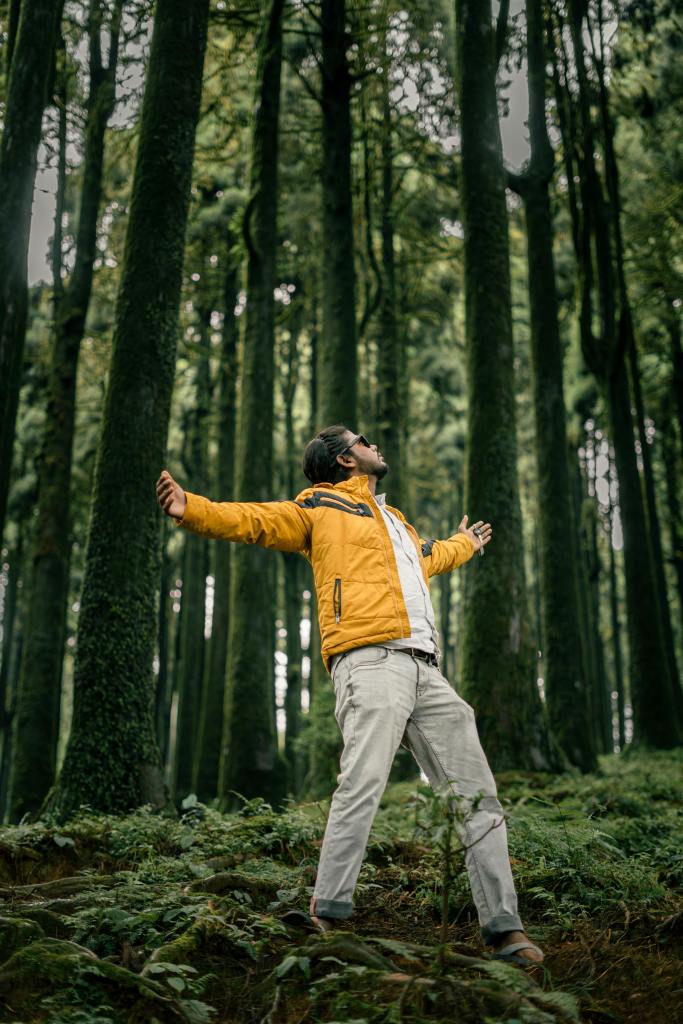


The Impact of Loneliness on Our Health

Getting older sucks, but it’s felt most in the areas often overlooked. As children, we make friends by circumstance. Friendship is largely a function of common interests, age, and the spaces we frequent. As a child, it’s simple. You’re forced to go to school and share those three aforementioned factors with many peers. Friendship is almost thrust upon you at a young age.

Because of this, we’re not always well-adapted to making friends as we age. We’re pushed into the real world, a veritable ocean of people with varied interests, and a large range of ages. Additionally, we might not frequent the spaces that would facilitate the alignment of those other two factors. Pair that with a hyper-individualized culture and a way forward begins to seem unclear. The result? Loneliness.

A 2024 study suggests that loneliness could lead to a “29% increased risk of heart disease, a 32% increased risk of stroke and a 50% increased risk of developing dementia in older adults” (Penn State, 2024). With such a high tole on our wellbeing, it’s a wonder it’s not talked about more in our society. It also illustrates the mind-body connection; loneliness being predominantly an emotion that has significant physical manifestations in our bodies.

In his book Own Your Past, Change Your Future, Dr. John Delony refers to studies that suggest a link between loneliness and personality disorders, psychoses, suicide, impaired cognitive performance, cognitive decline, and depression (2022). Referring to other studies, he likens loneliness to a public health crisis and that loneliness causes physiological responses that are comparable to being assaulted. He echoes that these physiological responses are more damaging than smoking cigarettes.

If you’re experiencing loneliness, the important thing to remember is, you’re not alone. Funny that the very thing that makes us feel as though we’re on our own little island is proof that the population of this island isn’t just 1. It’s almost as if we’re all standing on different sections of the beach, looking out at the wide-open ocean and feeling isolated. Meanwhile, all we have to do is turn and see there’s someone else on this island, looking out at the ocean beside you.

So, what should we do to connect to our fellow island dwellers? Delony (2022) suggests:

  • “Make it a priority and decide you’re going to do it.”

By making meeting new people and fostering relationships a priority, you increase your chances that you will actually follow through with the desire to connect to people.

  • “Look for shared experiences.”

Like I had mentioned before, shared interests and shared spaces amounts to a shared experience. This could be as simple as a yoga class, cooking workshop, or even a gym session.

  • “Go first and extend hospitality.”

Make the invite first. By welcoming a friend into your home, you’re sending a message that you like to have that person in your life.

  • “Say yes to invitations and adventures.”

When you’re invited anywhere, make it a habit to say yes. This will naturally lead to shared experiences. I’m writing this while just recently refusing a New Year’s invitation, after having enthusiastically spoken to this person about it. I developed a cold a short time after and just can’t go. I’m kicking my butt right now because I really wanted to go, but life had other plans. The key is that if I were perfectly healthy, that refusal would have been a hard yes. Just a small aside to highlight that while you can be as well intentioned as possible, sometimes life has other plans for you, and it’s important to not be too hard on yourself in those moments. This goes for all these suggestions, so long as it actually is misfortune and not avoidance.

  • “Get out of your house and go where other people are.”

You’re not going to be making any friends on your couch watching tv. Hey, I like to watch tv too, but the truth of the matter is, friends are made in the real world, not at home in our cocoons.

  • “Find people to serve.”

Making a rule for your life to be in service to others is a good way to connect with people as well. This could look like volunteering, giving you opportunities to connect to fellow volunteers and other people you will cross during these moments.

Post inspired by these sources:

Delony, J. (2022). Own Your Past, Change Your Future: A Not-So-Complicated Approach to Mental Health. Ramsey Solutions.

Penn State. (2024, June 13). Short-term loneliness associated with physical health problems. ScienceDaily. Retrieved December 14, 2025 from http://www.sciencedaily.com/releases/2024/06/240613140903.htm

Are You Getting Enough Rest?

One of the surefire ways to develop a burnout is to overwork, to expose yourself to too much work-related stress. We are often inundated with productivity blogs, videos, and hustle culture rhetoric that makes it almost unavoidable in our fast-paced Western world. While productivity is not evil, in fact, it is necessary and quite beneficial to our wellbeing; too much of a good thing can lead to an imbalance. With the holidays right around the corner and a possibility for some time off from work, I thought it would be a crucial time to talk about rest.

With our busy lives the way they are, it’s likely that you’re not getting enough rest (and if this doesn’t apply to you, I will have a future post for you lay-abouts, a group of which I sometimes also belong to, so no shame). The truth is that Western culture encourages professionals to overwork. Busy work lives, paired with the ways we sometimes unwind on our off hours, is a concoction that greatly amplifies the risk of burnout and depression.

The key is to strike a reasonable work/life balance. This might look different for each of us. For me, with the job in helping relationships, the hours often recommended and encouraged are modest. For some pulling large salaries with greater competition amongst employees, this might look closer to 50-80 hours a week to earn the figures some employers expect. Some are comfortable with that and are perfectly functional with such a high workload. Others would burn out within a week of pulling long shifts. Regardless of your workload tolerance, eventually, your body pays the price. I don’t only encourage rest; I see it as a necessity for wellbeing. Only you know your own limits, and it’s best to come to understand those limits without pushing the boundaries too much.

On a neurological level, quality rest is beneficial for productivity. It’s in activating your brains “default network” (or Default Mode Network) that you can be sure to be at your best when later engaging your “executive network” (or Frontoparietal Network). The default network is activated when your brain is not engaged in a focused task, while in a more relaxed state. It helps with what has been widely considered functions for wellbeing, such as: memory retrieval, self-reflection, and planning; all of which can be crucial for quality productiveness.

How do you engage this network? Simply getting into a state of relaxation. Some concrete strategies could include:

-not working too hard (although I do encourage hard work. If you’re overworking, tone it down to a point where you’re working hard, but not TOO hard. If you’re burning out, significantly toning it down could be more appropriate).

-Mind wander. It’s in these moments where we’re bored that we are improving our creativity and imagination.

-Envelope yourself in nature. Forest bathing and Ecotherapy work.

-Don’t be afraid to be alone. We often emphasize being social, with extroverts often having a social advantage over introverts. There is a lot an extrovert can learn from introverts, however. Activating the default network requires this in most instances, so value your alone time. Balance is important. Solitude can be incredibly beneficial, while severe isolation for too long is something to avoid entirely.

-Sleep. I can’t think of a better way to disconnect from the external world than with quality sleep. You are quite literally cutting yourself off from external stimuli and are becoming enveloped in imagination when you dream.

-Avoid screens to unwind. While great fun in moderation, you are not activating your default network when you’re scrolling social media or watching tv. Your brain is interacting with this content, albeit in a passive way. Engaging in this type of entertainment does not slow your thought processes.

-Have fun. As adults, we need to play too. Whether it’s a sport, video game, or board game, active rest is just as legitimate as its inactive counterpart.

If you haven’t gotten with the program yet, I just can’t emphasize enough the importance of rest. It is just as important as productivity, if not more so in our culture because it is all to often neglected.

This post was inspired by Dr. Joseph Jebelli’s “The Brain at Rest: How the Art and Science of Doing Nothing Can Improve Your Life” which I highly recommend you all read if you want a more in depth look at how to activate your default network and why it’s important to do so.

Jebelli, J. (2025) The Brain at Rest: How the art and science of doing nothing can improve your life. Random House Canada.

The Relationship Between Caffeine and Sleep

We would be hard pressed to find someone who doesn’t indulge in a little caffeine intake here and there. It’s in coffee, tea, chocolate, soft drinks, and the big bad energy drinks that are so commonly consumed. But what is it doing to our sleep? The answer isn’t that surprising.

Our great local Université de Montréal published a study that underlines the impact of caffeine consumption on sleep. This study demonstrated that caffeine impacts the “criticality” of the brain. To keep it simple, too much activity and there is chaos, too little, and there is nothing. Criticality is the middle point between these two states, where the brain is functioning at an optimal level.

The thing is, by consuming caffeine too close to bedtime, you are pushing your brain beyond the criticality zone where it is more alert. Sounds good, right? Well, if your goal is to get to sleep, not so much. While this state is useful during the day, it may be what is causing your restlessness.

“The results showed that caffeine increased the complexity of brain signals, reflecting more dynamic and less predictable neuronal activity, especially during the non-rapid eye movement (NREM) phase of sleep that’s crucial for memory consolidation and cognitive recovery”. Essentially, you are hindering your brain’s ability to get into that deep, restorative sleep that is required for your body and mind’s recovery. Simply put, when you drink a coffee, or a soft drink close to bedtime, you might not enter the proper sleep stages that facilitate your body’s natural recovery processes.

On top of it all, it was suggested that the younger you are, the more susceptible to these changes in brain processes that you are as well. Whether it be tolerance, or simply your brain being naturally more susceptible to the stimulant that caffeine is, the risk remains that the younger you are, the greater the impact of caffeine on your sleep.

When I was in my mid-20’s, I would typically drink 5 coffee’s a day, that would lead well into the night so I could be alert while studying. Now I realize my folly in such activities. To get the best, most restorative sleep possible, it might be better to cut the caffeine intake at about noon to 2pm so that there is little to no caffeine in your body when 9-10pm rolls around. This is even more important for our younger population, who are often up late into the night, but remain at a critical point in their lives to reap the benefits of sleeping well.

Ultimately, what you want to do from here remains your choice, but I know for myself, I will no longer be having that 5pm coffee to keep me going into the evening, because I know it’s half-life and I know how important sleep is to overall wellbeing. The question is, what are you willing to change in your life to give yourself the most favorable of outcomes?

Reference:

Arcand-Lavigne, M, Carrier, J, Frenette, S, Lajnef, T, Jerbi, K & Thölke, P,. Caffeine induces age-dependent increases in brain complexity and criticality during sleepCommunications Biology, 2025; 8 (1)

The Three Pillars of Wellness

It’s hard to stay 100% mentally healthy all the time. Western societies tend to facilitate productivity at the cost of our mental well-being. It is no wonder that anxiety is often talked about as a simple reality of our lives, whereas in some other cultures, it is unheard of. That is but one example of the many struggles we can face when the hustle is prioritized over our health. But how do we combat this? By ensuring you take care of what I like to call the three pillars of mental (and physical) wellness. I mention both because studies have shown that our mental and physical health are irrefutably interconnected. Here we will talk about what I believe the three pillars to be, but for a more detailed breakdown of what you can do in each of the pillars, look out for a future post that will lay it out with more detail.

The three pillars are, of course, nutrition, sleep, and exercise.

When we eat well, we are fueling our bodies to take on the day we have planned for it. While our macronutrients are fuel for our bodies, they are also fuel for our minds. Being in the right zones for protein, carbs, and fat, can make a world of difference. Calorie intake is also important for fuelling your body with enough energy in contrast to the calories we burn every second that we live. When you don’t have enough to eat, you experience hunger, which can be a huge mental distraction. If you’re eating the wrong foods, your mind and body feel it. And if you’re eating well, but not drinking enough water, you better believe your mind feels that too!

Sleep is integral for our recovery, and it also gives our waking mind a much-needed break. Sleep can be broken down into two types: NREM and REM. NREM can be further broken down into three stages that differ by level of wakefulness. Over the course of a regular sleepful night, you are fluctuating between these stages in various doses. You only need to hit your body’s personal targets to wake up the next day feeling well rested. Too little, and yes, even too much, can be detrimental to your mental and physical health. Of course, there are general guidelines on how much a baby, toddler, child, adolescent, adult, and older adult requires each night. While these guidelines can be helpful to act as a target for establishing your own personal baseline, the amount of sleep required for any one person is largely based on individual needs and cannot be determined by a collective average. Moreover, if you miss too much sleep in one night, you begin to accumulate sleep debt, which can result in continual mental and physical fatigue over the course of your wakeful day. It’s a good habit to get on a regular sleep schedule, but that’s a topic for another day.

The final pillar is exercise. When we are physically active, we are secreting many beneficial “natural drugs” in our brain. These neurotransmitters are responsible for letting us feel pleasure, relaxation, alertness, and a plethora of other life-giving thoughts and feelings. Our cardiovascular and muscle health are also impacted positively when we are physically active, allowing us to maintain a strong body, and consequently, a strong mind.

I’m not a regular gym-goer and when I’ve felt my worst, the last thing I wanted to do was go to the gym. But I was always glad when I did, particularly after the session, when the endorphins were kicking into overdrive. But the gym is not the only option for physical activity. In the book “No Sweat”, Michelle Segar advocates for finding activities you find pleasurable as a source of exercise. This helps with motivation. Maybe on those feel-bad days that I didn’t go to the gym, a brisk walk in nature did the trick. If you have a physical job, where your step count at the end of the shift hits 6,000 or more, maybe that’s all it takes to maintain your physical and mental condition. And that 6,000-step goal is not that arbitrary either. While many doctors have often used 10,000 steps as a daily goal for everyone, health benefits have been proven to be seen after just 6,000. So even with just 6,000 steps a day, you’re on the right track to combatting a sedentary life. But why stop at 6,000 when you can get to 7,000, 9,000, or even 11,000? There is the law of diminishing returns, don’t get me wrong, but being anywhere within that range goes a long way in breaking our often-sedentary habits. And just because the returns diminish with more accumulated steps, doesn’t negate the fact that you will still feel the benefits of a higher step-count.

There you have it, the three pillars of mental wellness. Of course, our minds and bodies are much more complicated than what is outlined above, but these three things are the basic necessities for our general well-being. Eat and drink the right amounts, get enough quality sleep, and get that body of yours moving, and most of you will see a difference in your mental health. Be warned though, before making any changes to diet, exercise, or sleep routines, it’s always best to talk with your family doctor to be sure that your current health aligns with any new regimen you want to establish. Now you’re in charge. Time to get healthy!

If any of you need help setting actionable goals to get where you want to be, whether it’s health, work, social, or any other life sphere; hit the button below to see how you can book an appointment with me. I’m looking forward to hearing from you soon!